
This is a text written in December 2019, taken from my first blog. I’m sharing it again because at the time I hesitated to publish it openly. This is one of my favorite articles—hope you enjoy it.
Although fashion is considered a subject of a banal nature, it has always been one of the most important elements in countercultural movements and in shaping our personality, culture, and individual or collective identity, since this factor is what gives the sense of belonging thanks to the visual semiotics generated by clothing.
London design remains to this day the most avant-garde and daring, and it is during the London of the 1960s that an amalgam of elements was generated that influenced the aesthetics of that era around the world to this day. This is the moment in history when London gets ahead of Paris and New York in terms of fashion, style, and design.

The landscape of 1960s London was created by the Baby Boomer generation, who grew up in an environment of destruction and scarcity, and during this decade managed to reach the economic maturity that provokes this highly creative reactivity. This is the moment when London became the place to be during that decade, among art galleries, nightclubs, concert halls, emerging bands, psychedelia, mysticism, happenings, experimental drugs, and boutiques that became places to have a good time, beyond the commercial intention. It is in these places, amid incense smoke, loud music, groups of young aristocrats, writers, photographers, and rock legends where the mid-20th century modernity was born—from London to the whole world.

Bazaar
Mary Quant’s Bazaar began as a collaborative boutique on King’s Road, with garments designed by students from Goldsmith’s College of Art, where she herself had studied art, until she began creating her own proposals.
Bazaar was an innovative store, which besides providing fashion, was a place where avant-garde happenings took place, with window displays created by figures like John Bates or Andrew Logg-Oldham, maintaining a strong visual hook. Later, Quant’s creations were mass-produced at affordable prices in department stores, but it is here, in this boutique, where the miniskirt was born.
Vince Man’s Shop
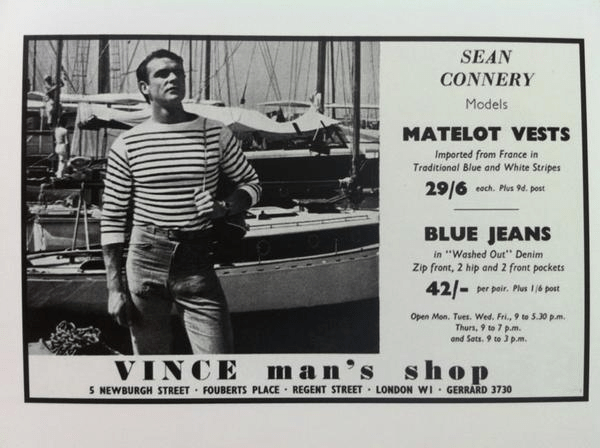
Vince began in the late 1950s; it was this shop that, alongside Bazaar, initiated the catharsis in fashion for both men and women, since before Vince, men’s fashion maintained that boring and monotonous tone with a reduced color palette.
This boutique started with a mail-order catalog system, which later transformed into a strategically located store in a part of Soho where the gay community gathered in those years’ London. That’s why its popularity grew thanks to its bold designs, initially aimed at the queer public—designs that were later adopted by the entire male sector, including Pablo Picasso, who acquired some garments there, and Sean Connery, one of the featured models in the store’s ads.
John Stephen
Although rarely remembered in fashion history, John Stephen is considered the King of
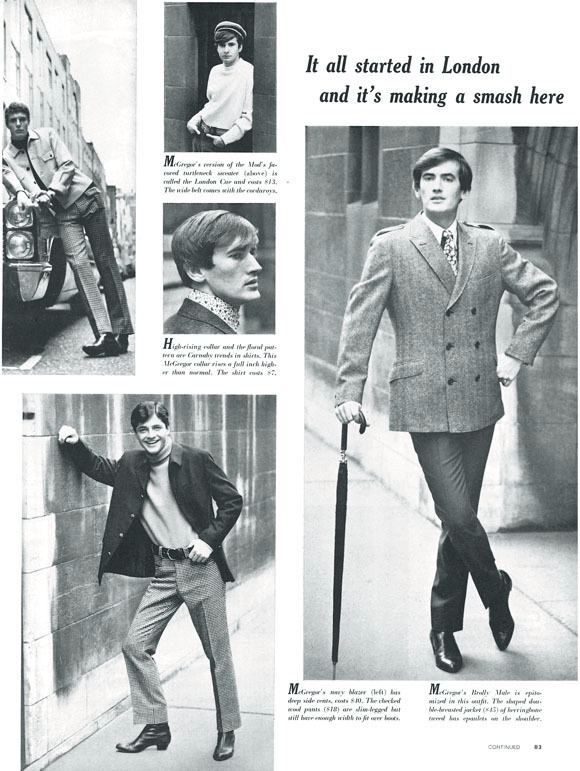
Carnaby Street, who revolutionized men’s fashion. Born in Glasgow, he specialized in tailoring three-piece suits and worked for a time at Vince’s, where, seeing the emergence of youth subcultures like the Teddy Boys in Britain in the late 1950s, he had the idea to create a modern tailoring shop of his own.
His style was characterized by printed suits, and part of his success came from offering a constant stream of new designs weekly, fitting perfectly with the needs of the new Mod subculture. This dandy-styled subculture, primarily interested in nightlife and appearance, demanded new outfits continuously for the sole purpose of “looking good.” Pop idols like The Rolling Stones, The Who, The Kinks, and The Small Faces were among his regular clients.
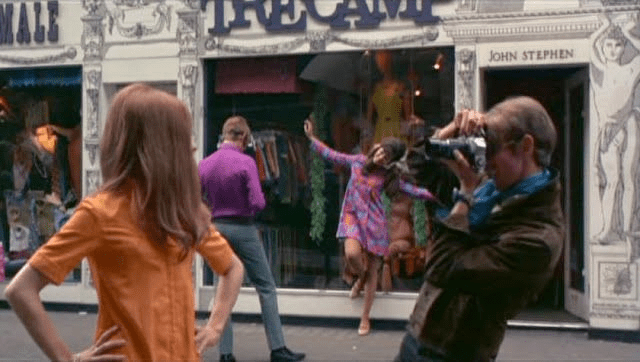
Trecamp
In 1965, John Stephen opened Trecamp, his first women’s fashion boutique. It had a tunnel-like structure with a mirror running along one wall, a design quite avant-garde for its time. His fashion offerings mainly consisted of PVC raincoats, dresses, coordinated suits, and accessories at reasonable prices.
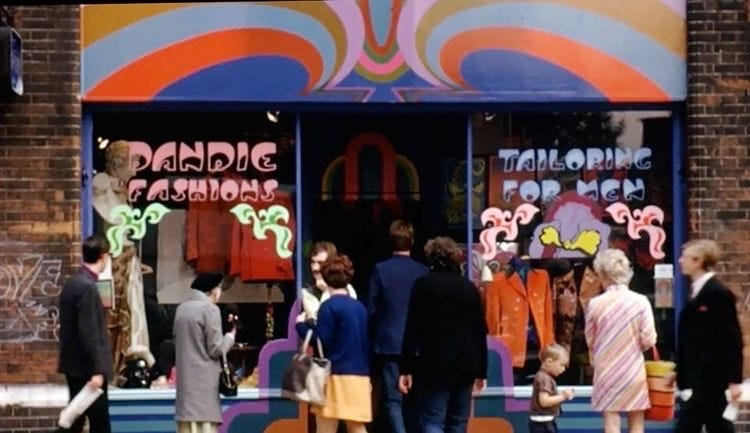
Dandie Fashions
It is said that when Dandie Fashions first opened its doors, the members of The Rolling Stones bought the store’s entire stock. They specialized in double-breasted jackets with velvet cuffs and lapels, garments that musicians like Brian Jones of The Rolling Stones popularized among other musicians and fashionistas of the era. It was rumored that if you were lucky, you might run into Brigitte Bardot browsing the shop.
Mr Fish
Mr Fish was another creative pillar in this movement. From a working-class background, he
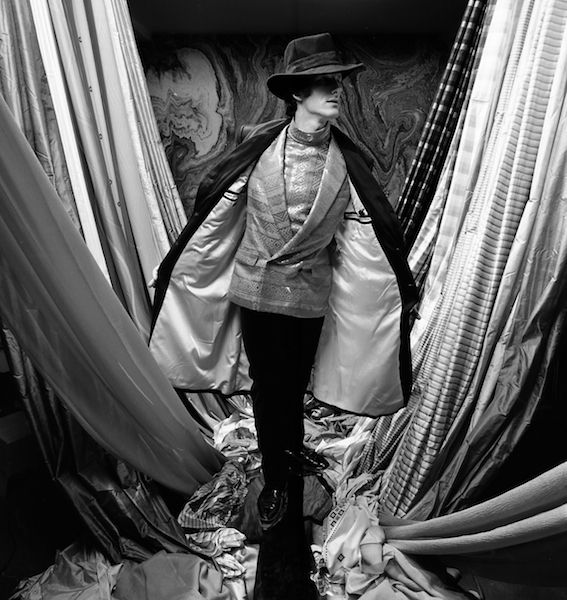
began his career as a designer in a dress shirt factory for ten years, where he was already recognized for his innovative ideas. Upon becoming independent and acquiring a partner with social connections, his success began.
His garments combined the foundation of classic British tailoring with transformations influenced by Edwardian and Victorian fashion. The androgynous male look was one of his most visible influences of the era, like the pleated-collar dress worn by Mick Jagger at the iconic Hyde Park concert in 1969 and again in 2013 for anniversary concerts at the same venue. David Bowie also chose one of Mr Fish’s men’s dresses for the cover of The Man Who Sold the World.
To this day, part of his work remains on permanent display at the Victoria & Albert Museum in London.
Lord John
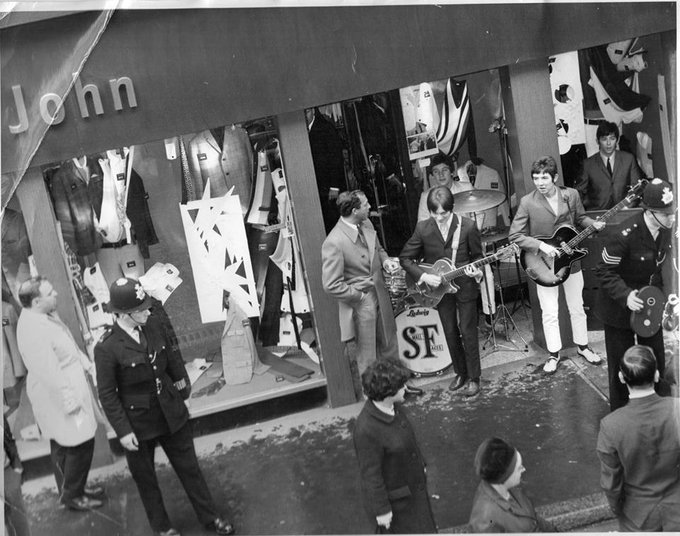
Lord John was founded in 1964, with two stores on Carnaby Street. Lord John’s strategy was to maintain a constantly changing inventory in the store, keeping novelty alive in its window displays.
Their design style consisted of garments made with impeccable tailoring techniques, a quality that led them to open up to eight boutiques by 1970.
Irvine Sellars
Another designer who emerged from Britain’s working class, a class that successfully imposed itself alongside the aristocracy in shaping this creative movement.
Irvine Sellars opened his boutique on Carnaby Street; at first, his main market was the mods, but by 1969 he already had 24 boutiques with offerings for both men and women.
Blades
Rupert Lycett Green was the owner of this boutique, which opened in 1962. Lycett Green, an aristocrat who was more a visionary and entrepreneur than a designer, offered products that combined Savile Row quality with the novelty of 1960s counterculture. He stayed relevant by adapting to the rapid trend changes of the time.
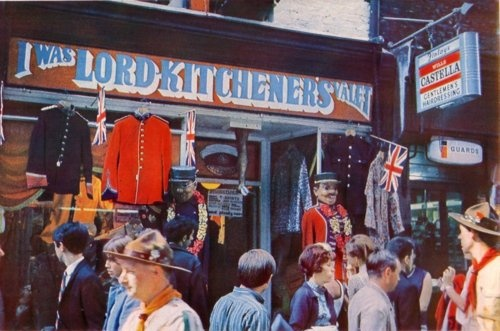
I Was Lord Kitchener’s Valet
Located on Portobello Road in the mid-1960s, this store didn’t offer the same boutique experience as other famous shops in London at the time. It was more of a second-hand clothing shop—what we now call vintage—like many other shops offering garments with history and Victorian-era aesthetics that became popular and shaped 1960s British fashion.
What truly defined I Was Lord Kitchener’s Valet in fashion history was its stock of military jackets that fashion icons like Mick Jagger and Jimi Hendrix popularized among their fans.
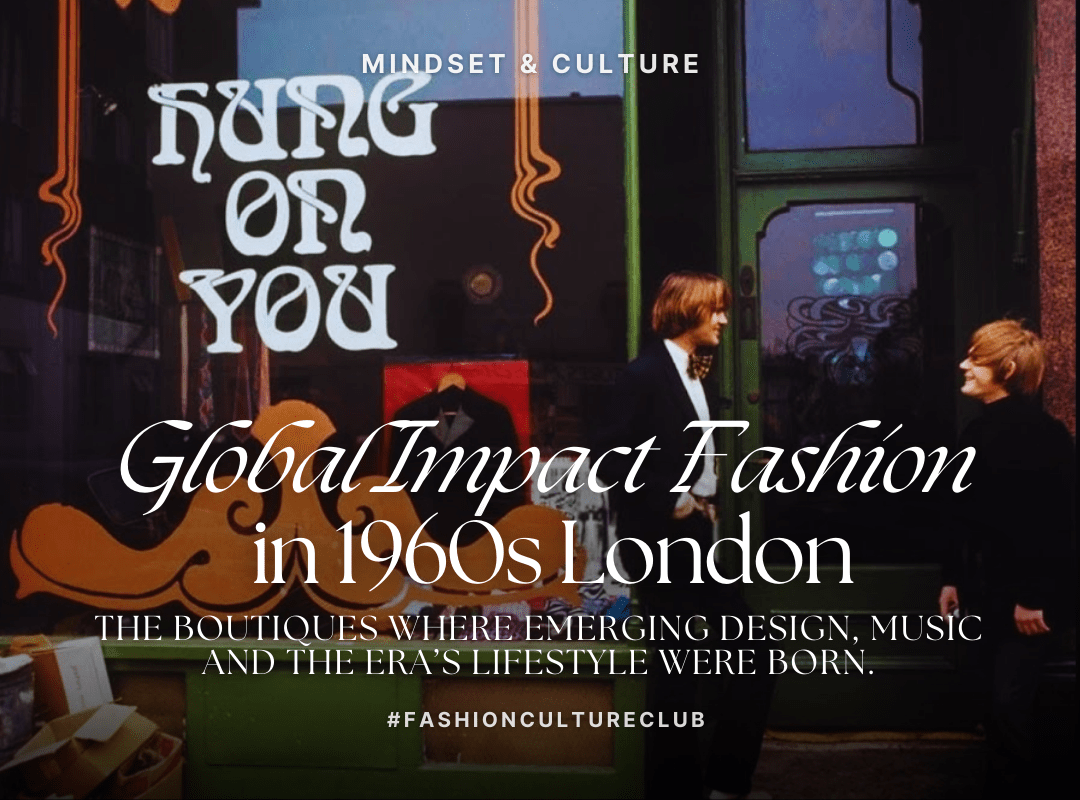
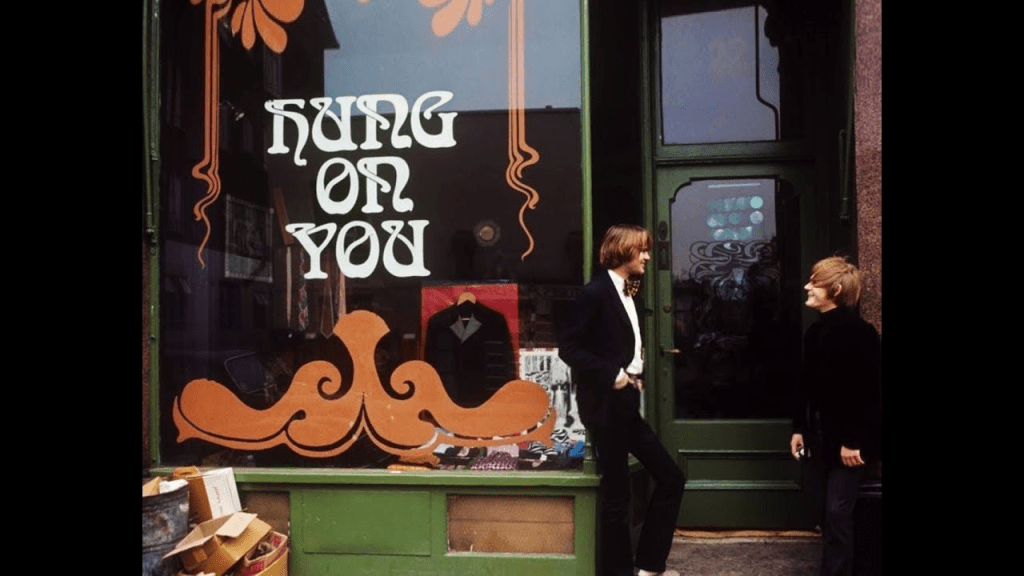
Hung On You
Founded by Michael Rainey—described as a dandy himself—on King’s Road in 1965, in collaboration with his partner Jane Ormsby-Gore, a socialite from one of the most famously stylish aristocratic families of the new generations.
Hung On You’s style was inspired by Rainey’s social circle, who, more than a designer, was an entrepreneur. Upon entering the store, one could see in the décor and racks the Oriental influence combined with vintage European style. Its inventory was full of liberty-print garments at excessive prices, adored by pop star fashionistas like Mick Jagger, The Beatles, and Rainey’s influential friends.
Granny Takes a Trip
If Granny’s style had to be defined, it would be: Hippie Mod. The name itself, Granny Takes A Trip, reflects the psychedelic zeitgeist of the era, referencing an LSD trip; it was even rumored that their labels were laced with the hallucinogenic substance—perhaps just a clever marketing tactic.
Granny’s was owned by Nigel Waymouth, who also designed for the psychedelic poster collective Hapshash and The Coloured Coat. Granny’s designs consisted of adaptations of vintage garments with modern tailoring transformations and imports from the East.
The decoration of Granny’s—which was very important for boutiques in both King’s Road and Carnaby Street—was influenced by Art Nouveau, as well as the poster art of Hapshash and The Coloured Coat. These types of spaces, as cited in the 1967 film parody Smashing Time, were places to hang out and spend time, as well as to set fashion and lifestyle trends.
The list of boutiques on King’s Road and Carnaby Street during this creative boom that shaped a movement of fashion and emerging designers with innovative ideas is quite extensive, though those mentioned here are the ones that left a powerfully visible aesthetic influence to this day. Although few of these stores are remembered today, it was here that the miniskirt or boho style was born—styles that in recent years have gained popularity again thanks to Kate Moss and the nostalgic festival look revival, which champions the return of this era’s trends: hippie culture, British sartorialism, and the mystical charm of the East that refuses to die completely.




 Análisis, Cultura y Mindset de la moda.
Deja un comentario