
In the same way, Ernest Gruening would argue that the racial, cultural, and spiritual nature of Mexico was that of an «Oriental» nation: peaceful, creative, and artistic. That is why he predicted that artistic creation would be Mexico’s raison d’être in what he called «the future evolution of the human race.» –Alejandro Ugalde, The Plastic and Visual Arts in the 19th and 20th Centuries.

For generations we have observed and admired personalities such as David Bowie, Alexander McQueen, Brian Eno, or Andy Warhol, and we have asked ourselves: Why do these figures seem to exist only in realities and times distant from our own? The question, or perhaps the starting point to unravel this, is: Why are there geographical places where, despite having an aesthetically important culture and controversial political-economic issues, they fail to give birth to this type of influential global movements? Perhaps it is due to the economic power of more influential or visible powers or to the adaptable nature of us Latin Americans, who, even living in conflict and discontent, find it easy to move on from problems or adapt to them instead of adopting a reactionary attitude as happens in Anglo countries.

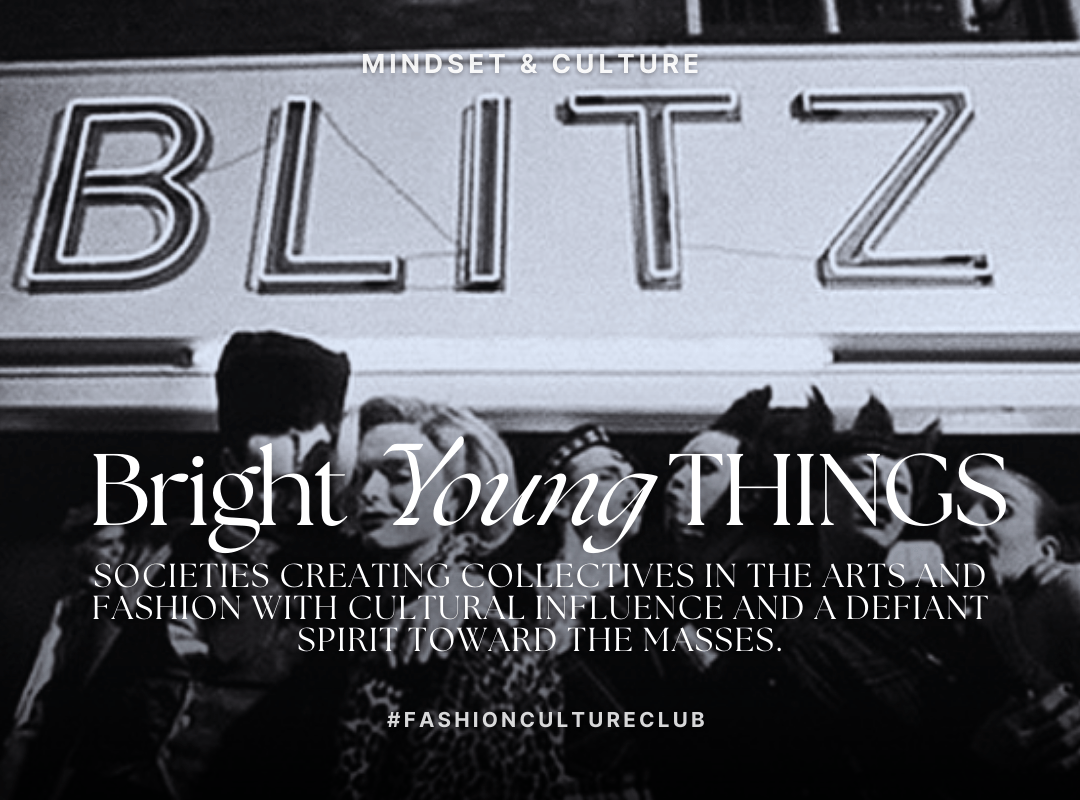
We have repeatedly questioned how these societies are capable of developing guilds of artists and personalities that have culturally influenced art, literature, criticism, fashion, music, and the commercial impact of these areas, as did The Bloomsbury Group in the early 20th century with Virginia Woolf and E.M. Forster; The Factory with Andy Warhol and other regulars like Gerard Malanga, Lou Reed, or Nico; The Blitz Kids and their long creative lineage coming from London’s art colleges, with Steve Strange, Boy George, or even John Galliano—Galliano has revealed the influence of this era through his artistic vision in some of his collections at Dior and Maison Margiela; the New York art movement that broke through at the end of the ’70s, formed by brilliant minds like Keith Haring, Jean-Michel Basquiat, Klaus Nomi, among others, and which was largely dissolved due to HIV; or the Movida Madrileña during Spain’s post-Franco era, whose influence was also felt in Latin America.

In each of these movements, which began underground, several of their direct or itinerant members served as cultural, artistic, or creative influencers; if properly observed, each of these movements emerged to break with tangible social repression of their time and geographic position. For example: Punk was born out of the sentiment towards the economic and labor crisis during the Thatcher period, as a protest through music and aesthetics. But from the exhaustion toward this anarchist attitude, with its crude and unkempt aesthetics, emerged the New Romantic movement, with its extravagant and stylized image, fueled by art and the melodic Synth Pop sound that continues to influence music today. Both currents conceived cultural icons, designers, photographers, musicians, and artists who helped evolve the ethos in their immediate environment, impacting the way future generations lived, dressed, and behaved. For example: Starting with the New Romantic movement, it became normal once again for the common eye to accept varied forms and colors in men’s fashion that had previously been unthinkable, even the occasional use of makeup—a gap that had earlier opened during the Swinging London era with the help of then-emerging designers like Michael Fish, and popularized by rock groups and aristocrats who were the it boys of that era.

These countercultures have functioned as a social domino effect in the liberation of human behavior and dress; one subculture influences another in some way, even if it seems they are not connected. Punk influences Grunge with its fatalistic attitude, Glam impacts New Romanticism, and so on with different movements.
Fashion and music have historically been two of the primary agents for spreading and showcasing the zeitgeist of subcultures, whether influential or not. Today, trends spread in very short periods of time, reducing fashion cycles to the point of becoming fads rather than actual trends, complicating the design and commercialization process for both major and emerging brands. Music, for its part, although it still produces great creative minds and now offers us greater access to countless proposals, seems to have lost the power of its words to generate change. There is quantity but not quality or impact, as if its vibrational frequency had shifted, preventing it from transforming our minds as it once did.

Here there are two points to address: First, that currently, aesthetic movements no longer carry significant political or social weight, as was observed during the Roaring Twenties with the liberation of the female body through fashion, music, and the transition of the woman’s role from ornamental to active and vocal—a vision very different from the concept of the innocent woman of the Victorian era. The second fact is how music, which previously functioned as a catalyst for trends and mass mood, now seems to no longer influence any of these aspects, much like what has happened with fashion. This is a worrying fact that reflects a current society that is consumerist, devoid of pretensions and questioning, spending most of its time merely consuming rather than creating.
Where has the impactful creativity gone in Mexico that was once seen with the muralists Diego Rivera, David Alfaro Siqueiros, and José Clemente Orozco? Today, although Mexico asserts itself through sounds representative of the country that invade music festivals, it results only in a cultural impact with little depth and discourse, becoming just a trend rather than a significant cultural movement. Who knows… we will only realize this with the passing of decades.




 Análisis, Cultura y Mindset de la moda.
Deja un comentario