
Talking about 79 years of creative direction at one of the most influential haute couture houses in the world cannot be limited to just a few lines; it is about a legacy and global impact. Those who have held this position leave a contribution and a personal mark on each creation, design and show.
Since its founding, the Maison has gone through changes, controversies, but above all, a constant search for innovation and challenges in the world of fashion.
After the impact of the “New Look,” the story of the house began to be written, and the reinterpretation of this silhouette in each creative direction stands as the starting point and letter of acceptance of the creator.

Below, we will take a journey through the creative directors who have passed through the Maison, leaving their mark by the simple fact of being at the helm of an empire such as the House of Dior.

Christian Dior (1947-1957)
In a post-war climate, Dior’s essence defied criticism and managed, in just a decade, to make history in the world of fashion. Dior was a visionary in luxury and elegance, creating on his canvases ultra-feminine silhouettes, wide skirts, luxurious fabrics, prioritizing femininity while breaking the paradigms of the time. Perhaps this last aspect was what led to his success—because he dared, he took risks, and above all, his inspiration and taste for aesthetics led him to create art through fashion.
He proposed styles that would have been hard to conceive during times of austerity; that is, the large amounts of fabric seemed wasteful, but to him, they were an opportunity—a way to democratize elegance.
It was in his first collection, the “New Look,” in February 1947, that he made a global impact with the proposal of his pieces, from which the iconic “Bar” Jacket emerged.
Creator of great designs, his taste for beauty resulted in a collaboration with Salvador Dalí in 1949, in the creation of opulent, extravagant silhouettes inspired by surrealism and haute couture. Both parallels met to merge in the art of their works.
Dior laid the foundations of an empire through his radical innovation, commercial vision, creativity, and quality in his designs; thus achieving global expansion and redefining the course of women’s fashion.

Yves Saint Laurent (1957-1960)
Although his time at the House of Dior was brief, it was significant. Yves Saint Laurent, considered one of the most influential designers of the 20th century, was the young successor to Dior.
Based on Dior’s codes but with his personal touch, in January 1958 he debuted his first collection for the Maison with the Trapeze line, which—as the name suggests—introduced a trapezoidal silhouette in dresses, adding a modern touch to the designs.
Offering a prelude to the fashion of the 1960s, Saint Laurent contrasted the aesthetic that Dior’s clients were accustomed to, setting aside the conservative line and giving visibility to street fashion and youth culture. Knit jerseys and black leather jackets became part of the new proposals, leaving more than one person dissatisfied with this radical change.
Marc Bohan (1961-1989)
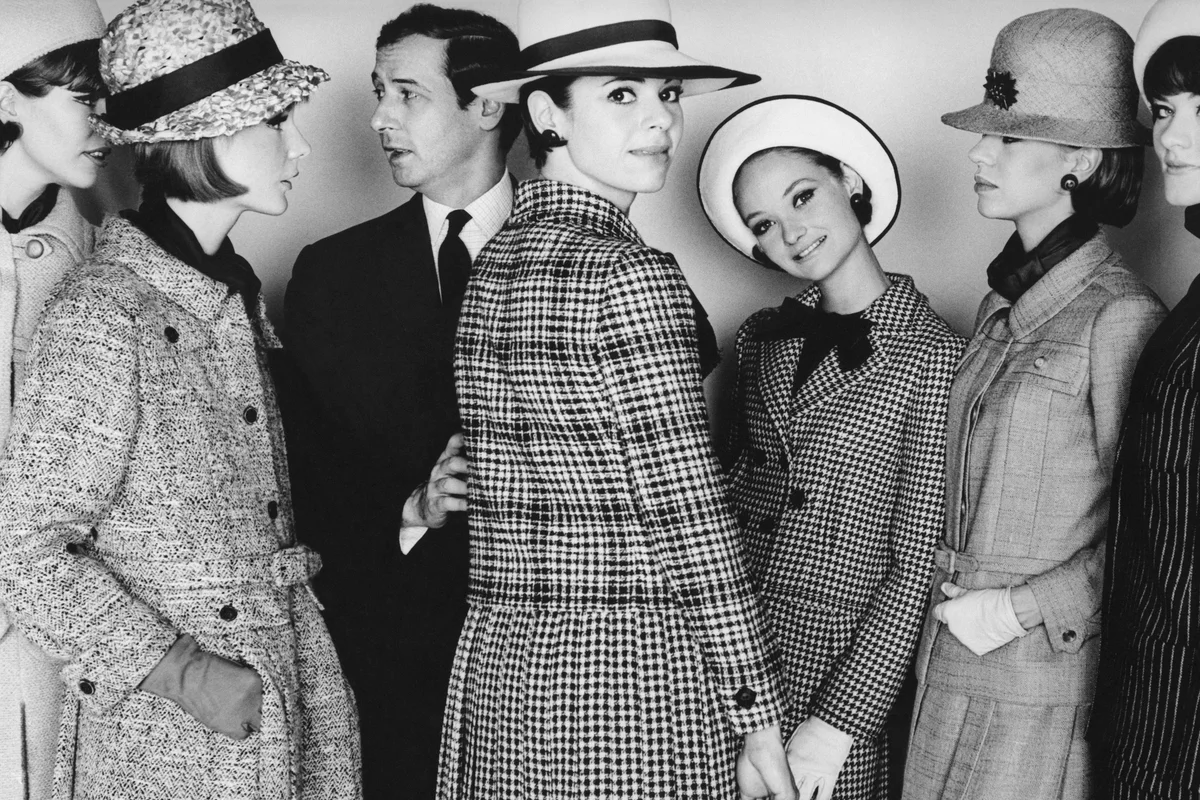
So far, the artistic director with the longest tenure at the brand. His appointment came at a critical point the house was going through. With visibly marked experience, he brought back the idea of elegance in silhouettes, remaining faithful to Dior’s essence while adjusting it to the demands of the time.
His Slim Look collection in 1961 marked the return of structured lines, which were highly sought after by haute couture clients.
After the mid-60s, Bohan launched the first prêt-à-porter line of the House of Dior, characterized by accessible garments where functionality and timelessness were the priority—without abandoning elegance. His time at the Maison was marked by the diversification of garments, creating a menswear line and Baby Dior, which strengthened the brand internationally.

Although characterized by a stable period, critics were quick to point out the lack of innovation and new proposals in the face of a market beginning to experience the cultural changes of the late 20th century.

Gianfranco Ferré (1989-1996)
Of Italian origin, Ferré made a difference at Dior, as he managed to fuse history, art, and fashion in his designs—pieces that, without straying from reality, belonged to a kind of theatrical work based on elegance and the mystical creation of baroque canvases.
Characterized by the extravagance of the 1980s and 1990s, he presented a theatrical, architectural, and opulent vision in his creations.
His first collection for the Maison debuted in July 1989, and references to the histrionic were immediate, as lavish silhouettes, pronounced shoulders, and exaggerated details marked a reinvention of the classic—including the “Bar” jacket with a touch of contemporary sensitivity.
In an era of consumerism and glamour, the man also known as the “Architect of Fashion” played with lace, embroidery, and volume, showing that austerity was the least present element in his collections. During his time at Dior, he also earned the nickname “Master of Excess,” and today he continues to be a reference point for excessive aesthetics among major brands and designers.

John Galliano (1997-2011)
His time at the French house revolutionized and rescued Dior from a stagnant image. With an extravagant approach, Galliano fused fashion, art, and theatre, showcasing his creativity and talent to such a degree that he revitalized the brand, generating fresh, perfectly constructed, elegant proposals—unthinkable for many, as they surpassed the capacity to even imagine such a grand haute couture show.
The runways under Galliano’s direction breathed drama, evoking the pure magic of fashion. Attention wasn’t only focused on the masterful pieces but on everything surrounding them. His talent for blending eras and cultures transported you to the historical moment, while at the same time, these creations with ancestral influences remained adapted to a contemporary style.
Unique, unimaginable pieces, a fusion of textures, and a visual odyssey were the magnificent hallmarks of the British designer. To set limits would have been too risky under Galliano’s direction. The reinvention of the “New Look” with hoops and sculptural silhouettes marked the beginning of a new chapter for the house.
Over the years, he maintained the essence of the Maison, but with his own signature—luxury, elegance, extravagance, opulence—proposals that, far from causing discontent, diversified the fashion market and attracted an increasingly younger audience. Galliano, a controversial, disruptive icon with powerful cultural depth and innate talent, ended his time at the House of Dior amid scandal—but his legacy is forever.

Bill Gaytten (2011-2012)
Bill Gaytten joined Dior in 2011, following the controversy caused by Galliano’s anti-Semitic comments. Gaytten had a heavy legacy to bear, which overflowed in his first collection—something far from the handling of pieces by his predecessor.
It seemed distant from the brand’s essence and received negative criticism. In January 2012, staying true to his own essence and detached from the drama with which Galliano worked, Gaytten introduced delicate and feminine styles, marking progress in his collections.
His time at Dior was discreet, divided opinions, and his contributions suggest slight changes leaning toward the romantic.
Raf Simons (2012-2015)
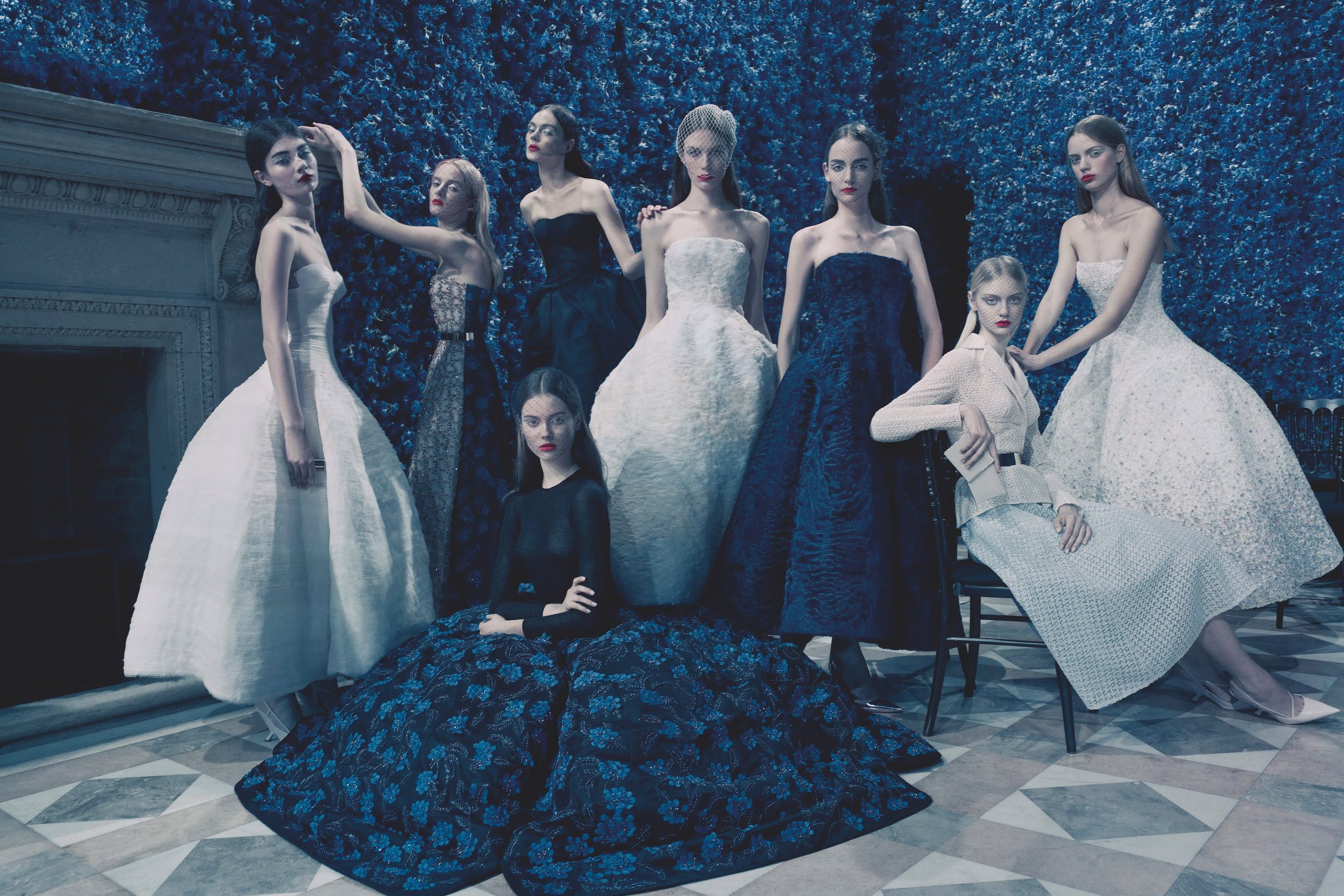
The Belgian designer’s time at Dior was marked by the minimalist and futuristic approach he embraced. His designs were clearly created for the future—imbued with sobriety and a reinterpretation of modern flair. He described himself as “a romantic, not of the past, but of the future,” a sentiment visibly reflected in his floral-inspired art; avant-garde silhouettes envisioned the modern woman—businesswoman, leader, and above all, free.
In July 2012, he presented his first collection, and following the line of his predecessors, paid tribute to the “New Look” and the Bar Jacket, reinterpreted with his modern touch. Impeccable tailoring, androgynous silhouettes—he clearly anticipated a trend destined to exist.
His unforgettable Fall 2013 collection featured works by Andy Warhol as part of the designs. His innovation was also reflected in numbers, as sales increased thanks to garments that were both wearable and sophisticated.
Simons dressed the modern woman, offering a fresh image of Dior. Simplicity, innovation, connection, and a touch of art left a lasting mark on the Maison.
Maria Grazia Chiuri (2016-2025)
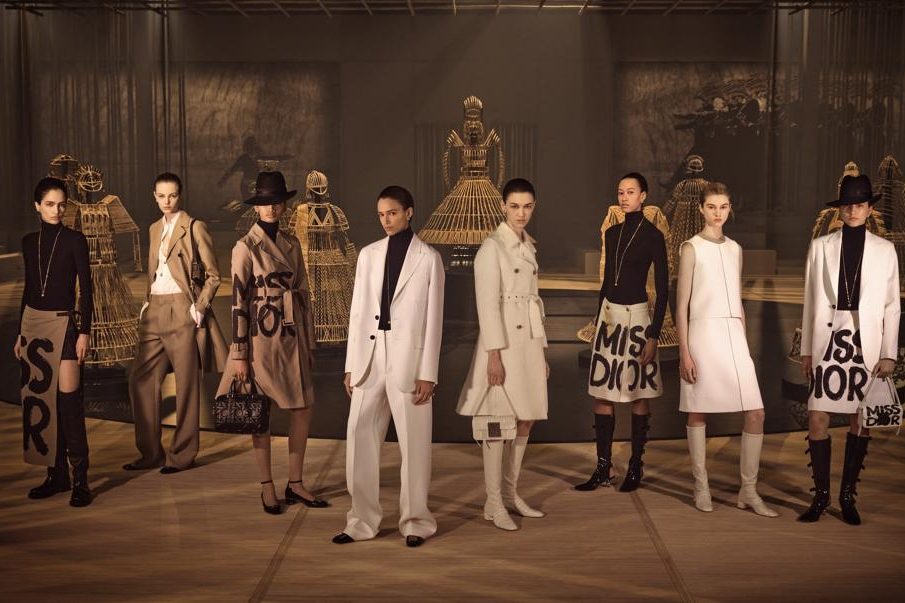
The feminist voice of Dior and the first woman to lead its Creative Direction. Chiuri transformed the brand’s line, using fashion to deliver a message focused on the modern woman. Surrounded by a context in which female empowerment was rising strongly, she arrived with an activist approach, embracing a practical and comfortable aesthetic.
Her designs carried cultural weight, fused with a carefully crafted, accessible, delicate, and elegant aesthetic. Chiuri launched a reinterpretation of the New Look and the Bar Jacket with a sense of comfort: tulle skirts and cuts that maintained feminine essence. She focused her attention on the needs of contemporary women, where comfort prevailed—without abandoning elegance.
Messages printed on her garments conveyed voices of struggle, of women in a process of transformation—like a metamorphosis in today’s world.
She collaborated with women in the art world, such as photographers Nan Goldin and Sarah Moon, who portrayed female beauty from a cultural and artistic narrative.
Her runway shows were cultural spectacles—living stages like Marrakech, Mexico, Athens, Mumbai, and her native Rome bore witness to her art. She also collaborated with local artisans; a clear example was Cruise 2024, held in Mexico City, with clear inspiration from painter Frida Kahlo, radiating Mexican pink, drawing from Mexican culture, and featuring embroidery by artisans from Oaxaca, Chiapas and Puebla. Altogether, it was a visual explosion where female power shone in all its splendor through fashion, music, art, speech and brilliant direction.
Despite criticism suggesting that the messages had marketing intentions, Dior’s numbers tripled—increasing sales, followers, and clients.

Jonathan Anderson (2025-today)
Known for his innovative career at Loewe, Anderson joins Dior at a time when the luxury fashion industry is experiencing a decline in sales. He is the first designer since Christian Dior himself to lead all of the Maison’s lines.
His conceptual, gender-fluid fashion proposes bold trends, free of labels beyond the brand itself. His idea of freedom is reflected in his designs, with inspiration drawn from his roots, as he has mentioned on more than one occasion.
His creative ability to combine the commercial with the avant-garde has led Anderson down the path of success, making him today the cornerstone of the Maison.
His debut came in the final days of June, unveiling to the world his Spring/Summer 2026 menswear collection in Paris—designs that, at first glance, appear avant-garde, with a well-executed historical touch. This is precisely what he has embedded into modernity; the dichotomy of his garments, their colors, and contrasts present a timeless proposal with Dior’s signature: elegance.
The reinterpretation of the iconic “Tailleur Bar” has been another of Anderson’s revelations. Worn by Sabrina Carpenter, it featured a silhouette with a classic touch, inspired by the New Look and tailored aesthetics, showcasing a brief, fitted, and subtly voluminous figure.
Acclaimed and visibly moved, Anderson opens a new chapter at Dior. Legacy and challenge—key concepts he now faces in this new phase, where the journey continues with his next show, likely between September and October of this year.



 Análisis, Cultura y Mindset de la moda.
Deja un comentario