
Texto: Karlyne Manrique
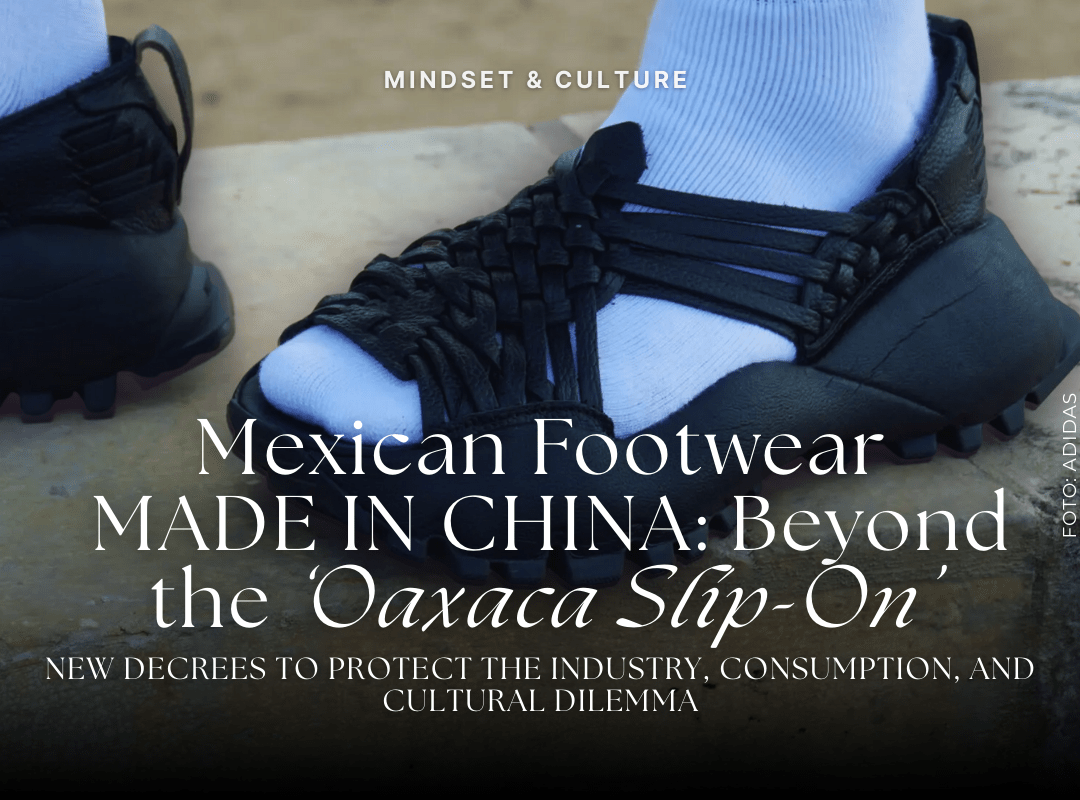
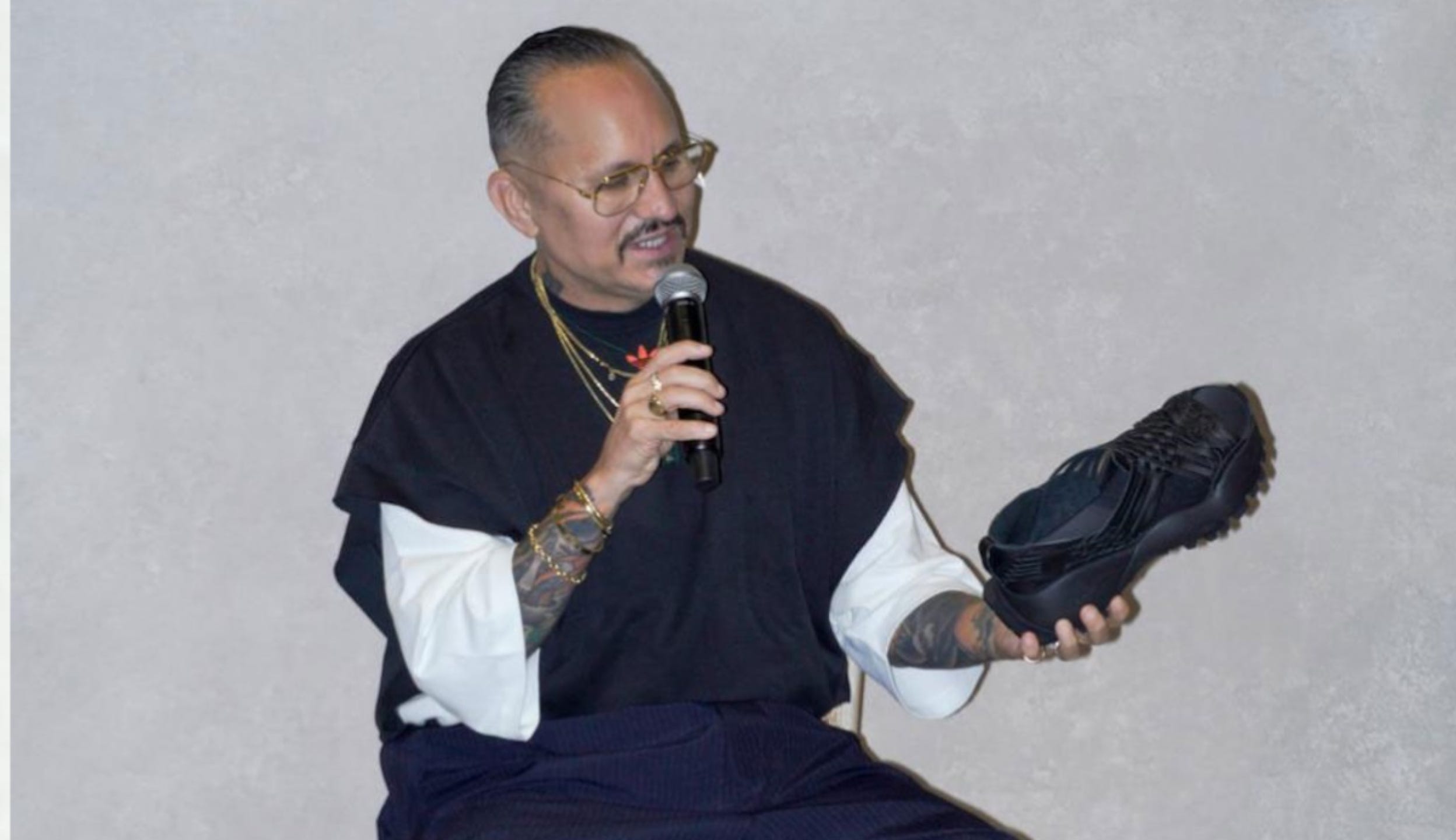
Recently, a wave of indignation arose following the launch of the ‘Oaxaca slip on,’ a design presented by Willy Chavarría for Adidas, which consists of an upper that imitates the weaving of a typical huarache originating from the community of Villa Hidalgo Yalálag, a town in Oaxaca, attached to a sneaker sole.
The rejection of this model was not only due to accusations of cultural appropriation but also because it was a product promoted with essence and inspiration from Mexican culture, yet Made in China.
This is undoubtedly a very serious fact that Chavarría and Adidas overlooked when conceiving and launching this product, precisely at a time when Mexico and many countries are suffering the consequences of the uncontrolled entry of Chinese ultra fast fashion products, which have undermined the sales and employment of many industries, including textile, apparel, and footwear.

These industries have been gradually shrinking, unable to compete with products that, amid the complicated economic situation of the country, which has affected general consumption, have led consumers to prefer acquiring garments that do not compromise their budget too much and offer constant novelty in design. For this reason, ultra fast fashion platforms and other products such as Temu and Shein are options Mexicans turn to for buying clothing, footwear, accessories, and all kinds of products, including decor.

Speaking specifically about national footwear, in this table, the consulting firm GAEAP makes a comparative analysis, in millions of pairs, of apparent national consumption that, despite recovering after the pandemic, fell from 339.50 million pairs in 2023 to 307.62 million in 2024.
In six years, from 2018 to 2024, imports went from representing 29.4% of the total pairs consumed to 45.3%. As a result, production levels declined, after a brief recovery, falling to 216.54 million pairs in 2024, well below the 260 million pairs produced in 2018. It should be noted that these data on the share of imports in national consumption do not include imports via courier companies (digital platforms), nor temporary imports of finished products that are not returned abroad.



 Análisis, Cultura y Mindset de la moda.
Deja un comentario